
Winter storage isn't about the car — it's about the four things that degrade when a car sits: fuel, battery, tires, and everything mice can chew. Eight items, one afternoon, and the car wakes up in spring like it never slept.
As an Amazon Associate I earn from qualifying purchases. Links below may earn crankfyi a commission — it keeps the lights on.
The short answer
Fill the tank with treated fuel, plug in a Battery Tender Junior, park on FlatStoppers (or overinflate the tires), wash it, cover it, and defend against moisture and mice. That's the whole program — everything below is the specific product for each job.
How we picked
We screened the best-selling storage products on Amazon and kept the six with exact US listings we could verify — model numbers, sizes, the works. The filter was simple: does it solve a real storage problem (not a theoretical one), and is it the category's proven pick? Researched to the same standard as everything here.
The 8-item checklist
- Treat the fuel — full tank + STA-BIL, then drive 10 minutes to circulate it through the lines.
- Tend the battery — Battery Tender Junior on the frunk terminals (or the 12V socket with the adapter from our battery tender page).
- Save the tires — FlatStoppers, or overinflate to ~45 psi as the free alternative.
- Wash and wax — never store a dirty car; contaminants bond to paint over months.
- Control moisture — DampRid in the cabin and frunk if the garage is damp.
- Evict the mice — repellent pouches in the cabin, frunk, and engine bay; steel wool in the exhaust tips.
- Protect the rubber — 303 on seals and trim so they don't dry out and stick.
- Cover it — indoor cover for a garage, outdoor for a driveway (see our car cover guide).
Quick comparison
| Pick | Product | Price | |
|---|---|---|---|
| Most essential | Battery Tender Junior 021-0123 Top pick | ~$38 | Check price |
| Best fuel stabilizer | STA-BIL 22214, 32oz | ~$12 | Check price |
| Best tire savers | Race Ramps FlatStoppers 14", 4-pack | ~$270 | Check price |
| Best moisture control | DampRid 18oz, 3-pack | — | Check price |
| Best rubber care | 303 Aerospace Protectant, 16oz | — | Check price |
| Best rodent defense | Grandpa Gus mouse repellent pouches, 16-pack | — | Check price |
Most essential: Battery Tender Junior 021-0123 Top pick
Deltran · Battery Tender Junior 021-0123 · 0.75A · 12V · 4-step charging program · 5-year warranty.
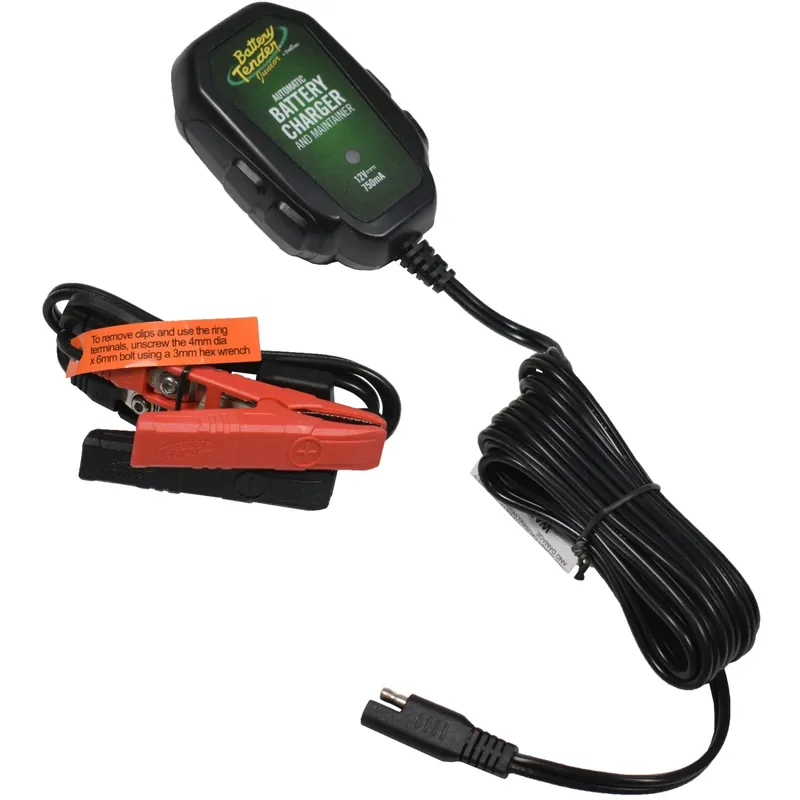
Best for: the single most important storage item — a dead spring battery ruins the whole plan. Skip if: you already own any smart maintainer; the Junior's only advantage is price.
★ #4 in Battery Chargers on Amazon · 8,000+ bought in the past month
- The 991.2's parasitic draw will kill the battery in weeks; the Junior's 0.75A float holds it indefinitely without overcharging.
- Four-step program (initialization, bulk, absorption, float) — it charges, then maintains, automatically.
- Spark-proof and reverse-polarity protected, with the same quick-disconnect SAE harness as the bigger Tenders.
Worth knowing: 0.75 amps is maintenance-only — it will not recover a battery that's already flat. If the car is dead now, charge it first, then let the Junior hold it. (The full tender comparison is on our battery tender page.)
Best fuel stabilizer: STA-BIL 22214, 32oz
STA-BIL · 22214 · 32oz · treats up to 80 gallons · keeps fuel fresh up to 24 months · ethanol-blend protection.
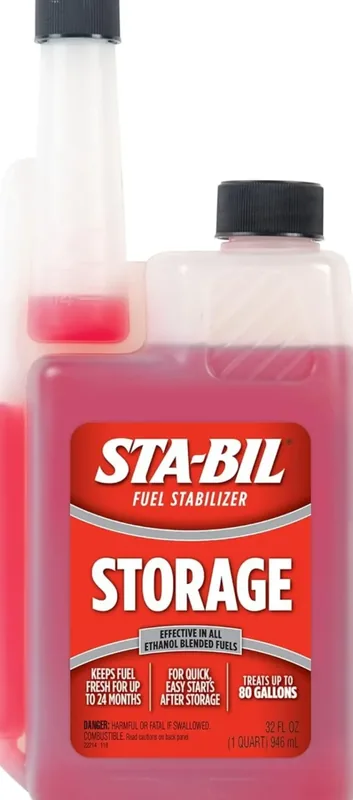
Best for: the full tank going into storage — stale fuel gums injectors. Skip if: you'll drive the car monthly; fresh fuel needs no stabilizer.
★ "Keeps fuel fresh for up to 24 months" — the category-defining claim, from the brand that invented it
- Ethanol-blended fuel starts degrading in 30–90 days; STA-BIL's antioxidants stop the varnish and gum that clog injectors over winter.
- One ounce treats 2.5 gallons — the 32oz bottle treats 80 gallons, so this one bottle covers years of storage seasons.
- Add it at the gas station before the final fill-up, then drive 10 minutes so treated fuel reaches the injectors — pouring it into a parked car treats only the tank.
Worth knowing: stabilizer can't fix already-stale fuel — if the tank's been sitting since summer, burn through it and refill fresh before treating. And store with a FULL tank: less air space means less condensation.
Best tire savers: Race Ramps FlatStoppers 14", 4-pack
Race Ramps · FlatStoppers RR-FS · 14" wide (fits tires up to 12" wide — the 991's 305mm rears are ~12") · 4-pack · 1,500 lb per ramp.
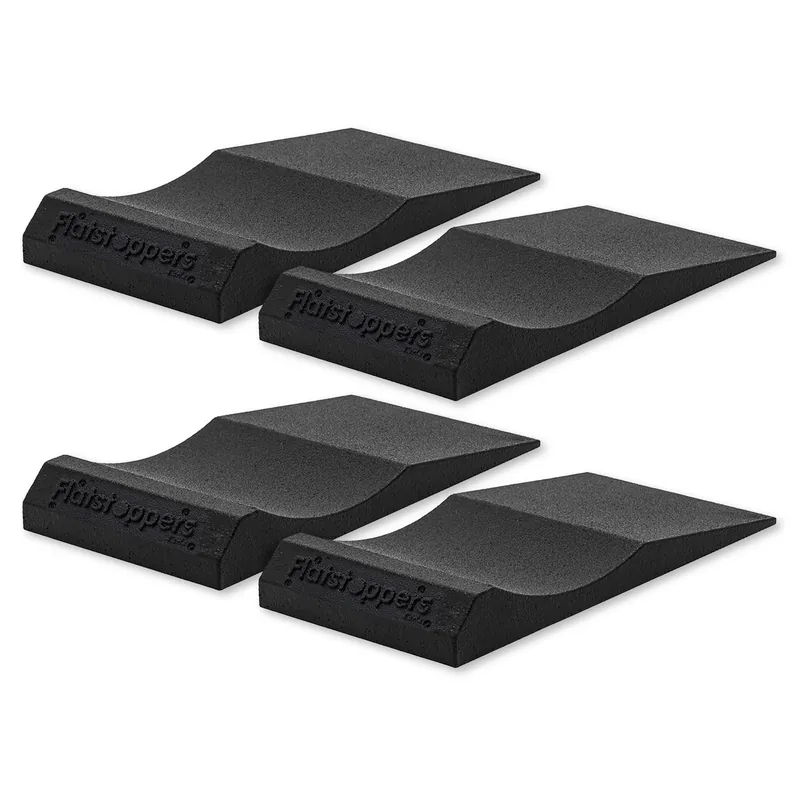
Best for: storage past 30 days — the point where flat spots stop being temporary. Skip if: it's a 6-week nap; overinflate to ~45 psi and save the money.
★ "Prevent flat spots when storing cars for 30 days or longer" · 50+ bought in the past month
- The concave cradle spreads the tire's load across a wider contact patch instead of one flat spot — the physics is sound and the collector-car world swears by them.
- The 14" width fits the 991's 305mm (~12") rear tires — the narrower 10" version would not.
- Drive-on, no jacking: position them, drive up, done. Each ramp weighs almost nothing.
Worth knowing: they're expensive foam — around $270 a set. The free alternative (overinflate to ~45 psi, then reset pressures in spring) works fine for shorter storage. And they don't replace driving: nothing preserves tires like use.
Best moisture control: DampRid 18oz, 3-pack
DampRid · disposable moisture absorber · 18oz tubs · 3-pack · calcium chloride crystals.
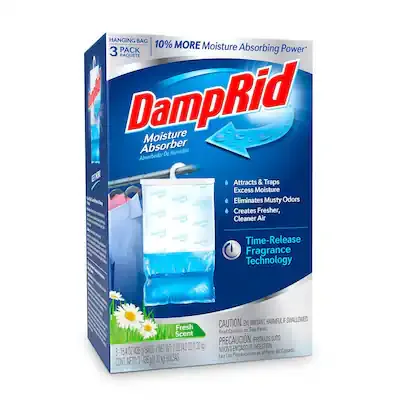
Best for: damp garages — one tub in the cabin, one in the frunk. Skip if: the garage is climate-controlled; you're solving a problem you don't have.
★ #6 in Dehumidifiers on Amazon
- Calcium chloride pulls moisture from the air with no power, no noise, no emptying a reservoir — the crystals just dissolve into the tub.
- Moldy headliners and foggy gauges are the damp-garage tax; three tubs across cabin and frunk cost less than one detailing hour.
- Disposable means no maintenance visits all winter — set them in November, toss them in spring.
Worth knowing: place them where they can't tip — the brine that forms will stain carpet and corrode metal if it spills. And in a truly wet garage, they're a supplement to ventilation, not a substitute.
Best rubber care: 303 Aerospace Protectant, 16oz
303 · Aerospace Protectant · 16oz spray · UV blockers for rubber, vinyl, and plastic trim.
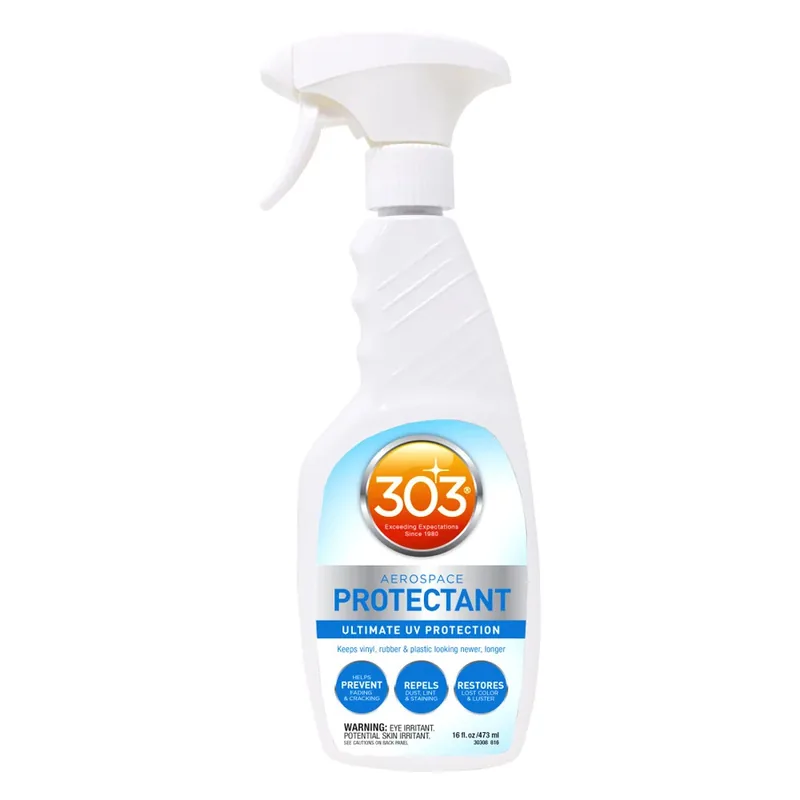
Best for: door seals, window trim, and engine-bay rubber before the long sit. Skip if: you want a shiny dressing — 303 is matte and protective, not glossy.
★ 50+ bought in the past week — the detailer-standard UV protectant
- Rubber seals dry out and take a set over months of sitting — 303's UV blockers and conditioners keep them supple so doors don't stick in spring.
- SPF-40-equivalent UV protection for the dashboard and trim the sun hits through the garage windows.
- Water-based, no silicone oils — it won't streak or attract dust the way cheap dressings do.
Worth knowing: it's for trim and rubber, not paint — and apply it thin and buff it off. Over-applied 303 leaves a hazy film that's annoying to remove.
Best rodent defense: Grandpa Gus mouse repellent pouches, 16-pack
Grandpa Gus · mouse repellent pouches · 16-pack · peppermint + cinnamon oil · listing specifically names stored vehicles.
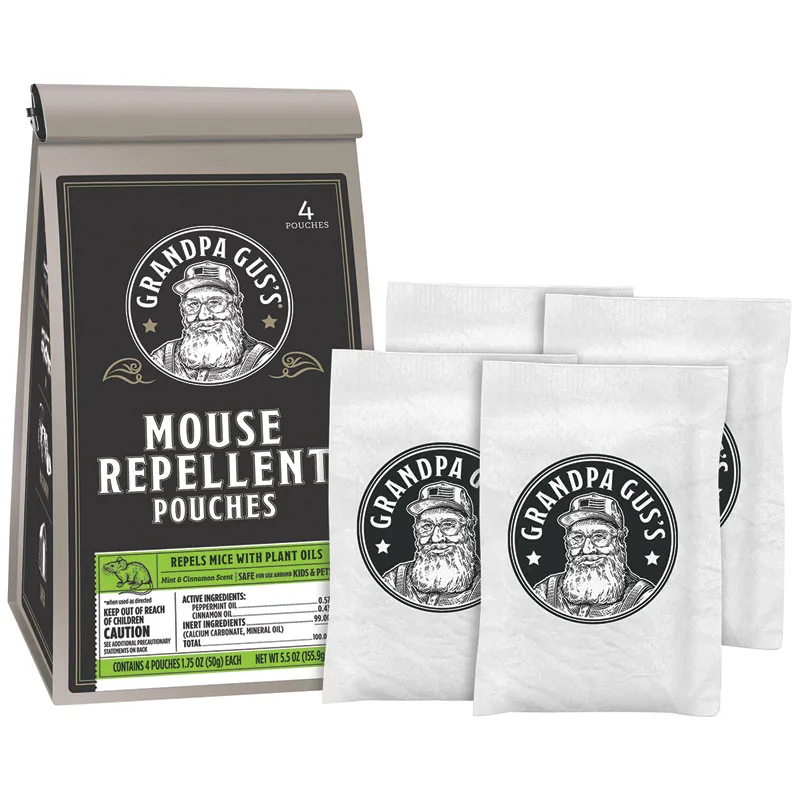
Best for: the engine bay, frunk, and cabin — anywhere a mouse sees a warm nest. Skip if: you think pouches replace exclusion — seal the garage first, repel second.
★ The listing names "vehicle cabs, or under covers of stored vehicles" — made for this job
- Mice love 911 engine bays — warm, sheltered, full of soy-based wire insulation to chew. A chewed harness is a four-figure repair; pouches are pennies.
- Peppermint/cinnamon oil is the repellent with the most anecdotal support and zero risk to the car — no poison, no traps, no dead mouse in the dash.
- Sixteen pouches covers the cabin, frunk, engine bay, and the garage corners around the car.
Worth knowing: the scent fades — replace pouches every 1–3 months through storage. And stuff steel wool in the exhaust tips; a determined mouse treats a tailpipe as a front door.
Also considered
- Jack stands for the full winter — some owners store on stands to unload the suspension. It works, but a 911 on stands for five months invites its own risks (seal settling, accidental knocks) — FlatStoppers or overinflation is the simpler answer.
- Fogging oil in the cylinders — proper for boats and seasonal engines, overkill for a 5-month car nap with modern synthetic oil.
- Trickle chargers (dumb) — rejected outright. An unregulated trickle charger will cook an AGM battery over winter; only smart maintainers belong on this page.
- Mothballs — effective rodent repellent, but the smell never fully leaves the cabin. The pouches above are the civilized version.
The verdict
Eight items, one afternoon, about $350 in products that mostly last for years. The non-negotiables are the tender and the treated full tank — everything else scales with how damp your garage is and how long the nap lasts. Do it in November and the car wakes up in April like it never slept.
Get the Battery Tender Juniortop pick · ~$38FAQ
Should I start the car periodically through winter?
No — a 10-minute idle does more harm than good. It never gets the oil hot enough to burn off condensation, so you're just adding moisture and fuel dilution. Either drive it properly (20+ minutes, fully warm) or leave it alone on the tender.
Full tank or empty tank for storage?
Full, treated tank. Less air space means less condensation on the tank walls, and treated fuel stays fresh for up to 24 months. An empty tank invites rust and varnish.
Disconnect the battery instead of a tender?
You can, but you'll lose radio presets, clock, and window indexing — and the 991.2's systems prefer staying powered. A tender is less hassle and keeps everything alive. If you do disconnect, the frunk has a manual release procedure — learn it before you need it.
FlatStoppers or just overinflate the tires?
Overinflate to ~45 psi for storage under ~2 months — free and effective. Past 30+ days in one position, FlatStoppers' cradle design is the better answer; the collector-car world standardized on them for a reason.
Do I need to change the oil before storage?
Yes — used oil is full of acids and contaminants that etch bearings over months. Fresh oil before the nap, then you're good until spring (or the next interval, whichever comes first).
What about insurance during storage?
Don't cancel it — call your insurer about a reduced "storage" or comprehensive-only policy. A garage fire or a fallen tree doesn't care that the car wasn't being driven.
The battery deep-dive: Best battery tender for a 911 → · Cover it right: Best car cover for a 911 →
As an Amazon Associate I earn from qualifying purchases. crankfyi is reader-supported — when you buy through links on our site, we may earn an affiliate commission. Prices as listed on Amazon at the time of writing.